your partner in
sustainable materials
research & innovation
SUM Institute is an independent R&I think tank dedicated to sustainable materials innovation. We connect science, policy, and practice to accelerate the transition to a circular, bio-based materials economy — placing human needs at the heart of every question we ask.
Our work is interdisciplinary, human-centred, and firmly rooted in the European sustainability agenda — with a particular focus on the underserved innovation ecosystems of Central and Eastern Europe.

our vision for the future of
materials research
sustainable
Creating materials solutions that minimise resource consumption and pollution while meeting genuine human needs without compromising the ability of future generations to do the same.
circular
Embracing circular economy principles where materials are designed to flow continuously through biological or technical cycles, minimizing waste and maximizing resource efficiency.
collaborative
Collaboration accelerates discovery cycles, optimises resource use, and ensures that solutions address real-world needs by bringing together diverse stakeholders—researchers, industry actors, policymakers, and communities working in genuine partnership.
interdisciplinary
Solving complex material challenges requires synthetic knowledge from chemistry, physics, engineering, biology, materials science, and social sciences. We integrate diverse methodologies and perspectives to offer holistic solutions.
human-centred
Placing human needs, behaviours, and values at the centre of materials innovation. By understanding how people experience materials throughout their lifecycle, we can ensure that innovations benefit society rather than serving purely technical interests.









inclusive
Diverse teams produce more innovative solutions that better reflect the needs of all communities affected by materials innovations. Inclusivity means ensuring equitable access to research opportunities, leadership roles, and the decision-making processes that shape materials research priorities.
our approach
horizon scanning
We systematically monitor emerging innovations, breakthroughs, and trends in sustainable materials development to identify early signals of change. Using diverse methodologies including patent analysis, literature review, expert consultation, and data analytics, we anticipate future opportunities and challenges, enabling policymakers and research communities to respond proactively.
trend analysis
We examine patterns and trajectories in sustainable materials development to understand what is changing and why. Rigorous trend analysis translates raw information into coherent narratives, providing evidence-based intelligence for policymakers and innovators to understand structural shifts in research and innovation.
policy insight
We bridge the gap between science and policy by translating R&I intelligence and expert analysis into clear, actionable insights designed for policymakers and research funders, accelerating sustainable materials adoption. At the same time, our continuous monitoring and analysis of the policy landscape provides the materials research community with a key source of information to respond to governance and regulatory frameworks.
stakeholder engagement
We actively involve researchers, industry partners, policymakers, civil society organisations, and affected communities throughout the R&I process. Genuine stakeholder engagement increases the societal relevance and impact of materials research, builds trust in innovation processes, identifies implementation barriers earlier, and creates shared ownership of sustainability transitions, ultimately leading to innovations that are both technically sound and socially accepted.



strategic planning
Strategic planning involves synthesising evidence, anticipating future innovation needs, and identifying critical pathways, providing a structured framework for directing research investments toward high-impact solutions. Based on foresight analysis, we develop comprehensive, long-term R&I roadmaps aligned with EU policy priorities and emerging sustainability challenges.
areas of interest
construction
Construction accounts for significant global emissions and resource consumption; transitioning to sustainable materials with circular design principles offers substantial potential for climate mitigation and waste reduction.
SUM conducts comprehensive lifecycle research on sustainable construction materials, examining the complete value chain. Our research encompasses bio-based alternatives like engineered wood products, bamboo, and hempcrete; recycled materials; and innovative low-carbon solutions such as self-healing materials and advanced composites. We rely on LCA methodologies to quantify environmental impacts at each stage, while evaluating technical performance, durability, cost-effectiveness, and realistic end-of-life scenarios. Through this holistic approach, we inform policy decisions that promote circular practices, resource efficiency, and decarbonisation in Europe's construction sector.
biomanufacturing
Biomanufacturing offers energy-efficient, low-emission alternatives to conventional production technologies, resulting in a wide array of sustainable materials for various sectors.
SUM explores the entire innovation pipeline for using biological means to produce bio-based alternatives to petroleum-derived plastics, fibres, and chemicals. Our work includes assessing regulatory frameworks, technology readiness levels, and market adoption barriers that influence the commercialisation of biomaterials.
agriculture
Integrating sustainable materials with regenerative agricultural practices creates mutually beneficial systems that enhance food security, draw down carbon, reduce plastic pollution, and build resilient local economies.
SUM's agricultural materials research focuses on the development, application, and lifecycle management of sustainable biomaterials that interface with agricultural systems and food production. Our research spans feedstock cultivation practices, through material synthesis and application, to end-of-life scenarios where biomaterials safely return nutrients to soil systems. We investigate bio-based seed coatings and encapsulation technologies that enhance crop resilience; precision delivery systems for agricultural inputs; biodegradable mulch films and agricultural plastics that prevent soil contamination, and edible coatings that extend food shelf-life while reducing packaging waste.






circular bioeconomy
Circular bioeconomy models reduce dependence on finite fossil resources, lower carbon emissions, and create economic resilience by transforming waste streams into valuable feedstocks—critical pathways for achieving EU sustainability and strategic autonomy objectives.
SUM addresses the full value chain of circular bioeconomy systems. Our research spans from synthesis to end-of-life scenarios, considering bio-based materials as part of complex value networks.
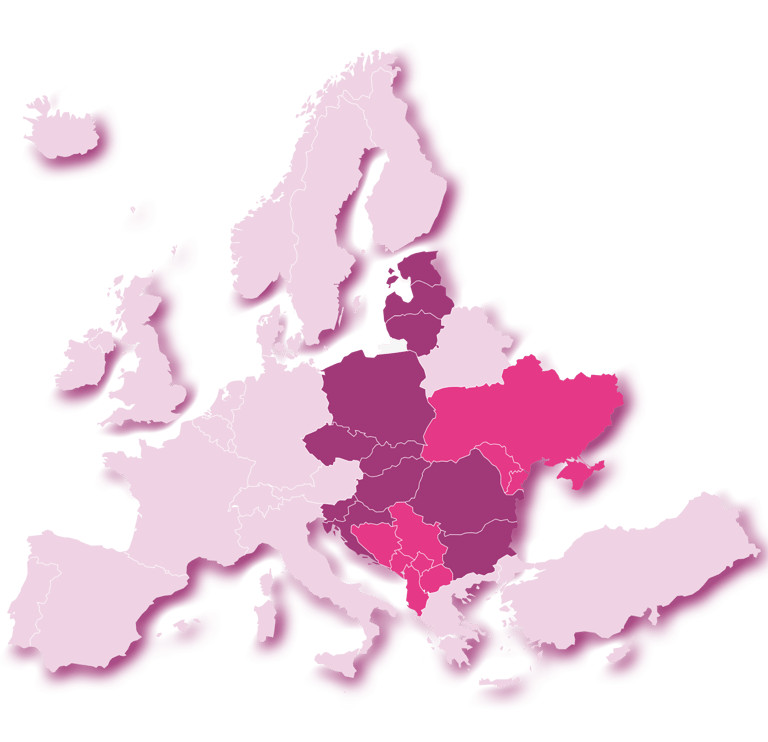
Central & Eastern Europe
We focus our efforts on the widening countries of Central and Eastern Europe (CEE), using the term in a broad sense to include EU Member States from the Baltics to Bulgaria, as well as non-EU Western Balkans and Eastern Partnership countries. The economic disparity between the CEE macro-region and the rest of the EU is compounded by a shortfall in innovation capacity and unique barriers to knowledge valorisation, creating a two-tier innovation landscape. The better integration of CEE countries into the European Research Area (ERA) requires targeted efforts but also presents a high catching-up potential.
our partners
Understanding the overarching trends of your business and overall market saves you time, money and energy in the long run, and can help you dominate your market.
How will you benefit?
Client insights
Increased efficiency
Process automation
Data-driven innovation
Market insights
Reduced costs

Address
Vásár u. 2.
1084 Budapest, Hungary
Contact
info@suminstitute.eu